The Best Portable Power Stations for Outdoors & Backup
A portable power station has quietly become one of the most useful pieces of gear you can own, whether you're camping off-grid, riding out a storm-related outage, or just trying to keep several devices charged without a rat's nest of adapters. Unlike a simple power bank, these units store real, usable household-style power and dole it out through AC outlets, USB ports, and sometimes car sockets. The tricky part is that "portable power station" covers everything from a 100W desktop charging hub to a 2,500W solar generator that can run a refrigerator for a day. This guide breaks down what actually matters when comparing capacity, output, and charging speed, then walks through three well-reviewed options that cover very different budgets and use cases.
How to choose a power station
Marketing pages throw around a lot of numbers, but only a handful actually determine whether a power station will do what you need.
Capacity (Wh)
Watt-hours (Wh) show how much energy the unit can store — the size of the fuel tank. A small charging hub with no internal battery is really just a fast wall adapter, while a 1,000Wh unit can run a mini-fridge for most of a day or keep a laptop and lights going through a multi-hour outage. Bigger capacity means more runtime, but also more weight and a higher price, so match capacity to what you actually plan to power.
Output (W)
Output wattage is the size of the tap, not the tank — it determines what you can plug in at once. A hair dryer or space heater can demand 1,000–1,800W by itself, while phones and laptops sip well under 100W combined. If a station's rated output is lower than an appliance's startup surge (motors often spike 2–3x their running wattage), it won't turn on, so check appliance wattage against the station's continuous and surge output before buying.
Port types
Look at the actual port mix, not just the count. Useful combinations include AC outlets for full-size plugs, USB-A and USB-C for phones and tablets, and sometimes a car-style DC output. Fast-charging standards like USB-C Power Delivery or GaN-based charging (used on compact multi-port chargers) let modern devices charge noticeably faster than a standard USB-A port.
Battery chemistry (LiFePO4)
Battery chemistry affects both lifespan and safety. Lithium iron phosphate (LiFePO4) cells are increasingly common in larger power stations because they tolerate far more charge cycles than standard lithium-ion before capacity degrades, and they're generally considered more thermally stable. If you plan to use a power station regularly for years, a LiFePO4 model is usually the better long-term investment.
Recharge speed
How quickly a unit refills matters, especially during multi-day outages. Many current-generation stations can go from empty to nearly full via a wall outlet in under two hours using fast AC charging, a big improvement over older designs. A fast recharge time means you can top a station back up between uses rather than waiting overnight.
Solar input
For camping, vanlife, or extended outages, recharging from solar panels turns a power station into a self-sustaining system. Solar generator kits list a maximum solar input wattage — the higher that number, the faster panels can refill the battery on a sunny day. Even if you don't plan to buy panels right away, a unit with solar-charging capability keeps that option open later.
Our top picks
ECOFLOW Solar Generator DELTA 3
The ECOFLOW DELTA 3 pairs a 1024Wh LiFePO4 battery with 1800W of AC output, making it a strong middle-ground pick for anyone who wants meaningful backup capacity without a full whole-home solar generator. It's rated 4.8 stars with 470+ sold, and it suits home backup during outages as well as weekend camping trips where you need to run a cooler, lights, and devices at once. At $428.44 (down from $1,518), it's the pick for buyers who want LiFePO4 durability and real appliance-running power at a more accessible price.

ALLPOWERS R2500 Portable Power Station with Solar Panels
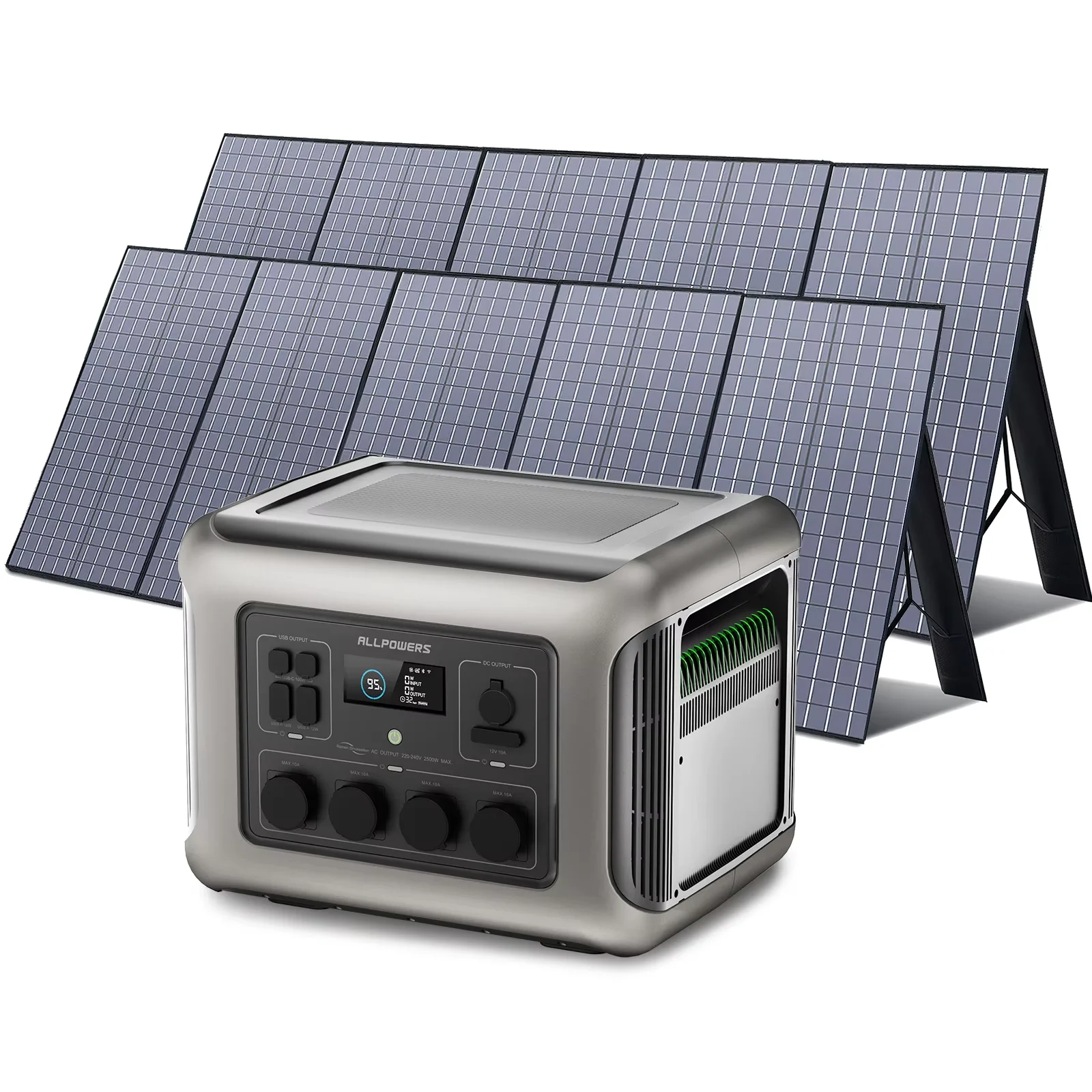
For buyers who need serious capacity, the ALLPOWERS R2500 is built around a substantial 1920Wh battery with 2500W of output, and this listing bundles it with 400W solar panels for off-grid charging. It carries a 4.9-star rating from 639+ sold, reflecting strong satisfaction among buyers running larger appliances, power tools, or an off-grid setup for extended periods. At $1,531.76 (down from $3,363.53), it's best suited to RV owners, off-grid cabins, or anyone treating this as genuine whole-home or job-site backup.
Rocoren 100W GaN 6-Port Desktop Charging Station
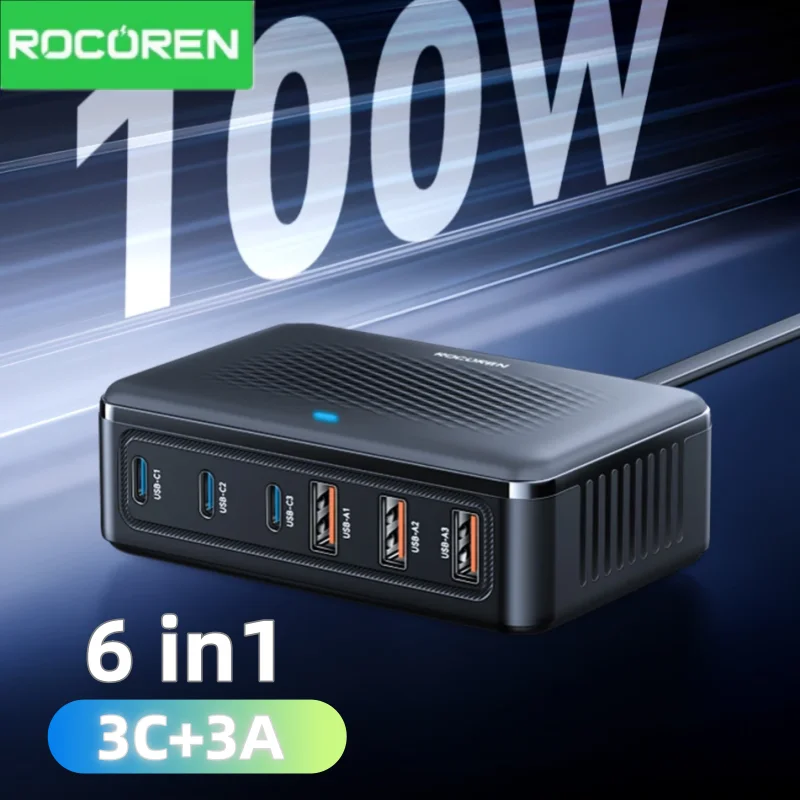
Not every "power station" needs to be a battery-based generator — sometimes what you actually need is a compact, fast desktop hub that charges a phone, tablet, and laptop at once without hogging every outlet on a power strip. The Rocoren 100W GaN charger uses efficient GaN technology across six ports with Type-C fast charging, and it's the top-rated pick here at 4.9 stars with 2,087+ sold. At just $21.30 (down from $44.38), it's the pick for anyone who wants a tidy, fast charging hub for a desk or travel bag rather than backup power for appliances.
Quick comparison
| Product | Price | Rating | Sold | Best for |
|---|---|---|---|---|
| ECOFLOW Solar Generator DELTA 3, 1024Wh LiFePO4 | $428.44 | 4.8 | 470+ | Home backup & camping middle-ground |
| ALLPOWERS R2500, 1920Wh 2500W with solar panels | $1,531.76 | 4.9 | 639+ | RV, off-grid & heavy-duty backup |
| Rocoren 100W GaN 6-Port Charging Station | $21.30 | 4.9 | 2,087+ | Fast desktop multi-device charging |
Pros & cons
Pros
- LiFePO4-based models (like the DELTA 3 and R2500) offer long cycle life and stable, safer battery chemistry.
- Solar-ready kits let you recharge off-grid, extending usefulness well beyond wall outlets.
- High-output units can run real appliances, not just small electronics.
- Compact GaN chargers deliver fast, multi-device charging in a fraction of the size of older adapters.
- Strong buyer feedback across all three picks, with ratings of 4.8 or higher.
Cons
- Large-capacity solar generators are a significant upfront investment even at discounted pricing.
- Bigger units add real weight and bulk, so they're less "grab and go" than smaller power banks.
- A compact charging hub like the Rocoren has no internal battery, so it only works while plugged in.
- Solar panel charging speed depends heavily on sunlight conditions and panel positioning.
Frequently asked questions
What can a portable power station actually run?
It depends on rated output and capacity. Phones, tablets, laptops, and LED lighting need very little power and can run off almost any station for extended periods. Larger appliances — mini-fridges, CPAP machines, or power tools — need higher continuous output and drain a battery faster, so match appliance wattage to the station's rated output first.
Should I get a power station for camping or for home backup?
The two use cases overlap but have different priorities. For camping, portability and solar-charging compatibility tend to matter most. For home backup, higher capacity and output matter more since you may need to run a refrigerator or several devices during a multi-day outage. Units like the ALLPOWERS R2500 or ECOFLOW DELTA 3 are versatile enough to cover both.
Can I bring a portable power station on an airplane?
Airline rules generally restrict lithium battery capacity, and most airlines cap batteries at 100Wh without special approval, with larger batteries often prohibited entirely. The power stations here range above that threshold, so check your airline's policy first — for most trips, these suit driving, RVs, or shipping rather than flying.
How long do these batteries actually last?
Lifespan is typically measured in charge cycles. LiFePO4 batteries, like those in the DELTA 3 and R2500, are generally rated for far more cycles than standard lithium-ion before capacity fades, which is part of why that chemistry has become popular in higher-capacity stations. Actual lifespan still depends on usage frequency and storage conditions.
What's the difference between a power bank and a power station?
A power bank is typically a small, pocket-sized battery meant to top up a phone via USB. A power station is a larger unit with a bigger battery (or, as with a charger like the Rocoren, no battery but very fast multi-port output) that includes AC outlets and can power laptops or small appliances depending on wattage rating.
Do I need solar panels to use a solar generator?
No — units marketed as solar generators, like the ALLPOWERS R2500, can also be recharged from a wall outlet or a vehicle's 12V socket. Solar panels simply add the option to recharge off-grid, useful for extended camping trips or outages where wall power isn't available.
How fast can I recharge a portable power station?
Recharge speed varies by model. Many current units support fast AC charging that brings a battery from empty to full in a couple of hours, while solar speed depends on panel wattage and sunlight, and car-socket charging is generally the slowest option.
Is a higher wattage output always better?
Not necessarily — higher output usually means a higher price and a larger, heavier unit. If your goal is charging phones and a laptop, you'll get better value from a compact option like the Rocoren. Higher output only matters once you're running larger appliances or several higher-draw devices at once.
Ready to power up?
Whether you need a compact charging hub for everyday devices or a serious solar generator for camping and backup power, matching capacity and output to your actual use case is key to getting real value from a portable power station. Compare the picks above against what you plan to run before you decide.
Explore more: Best Sellers · Today's Deals · All guides
Affiliate disclosure: Living Atlas may earn a commission from qualifying purchases at no extra cost to you.
🔗 This guide contains affiliate links. We may earn a commission at no extra cost to you.